köln cathedral

After a long trip from Berlin to Cologne, I spent my first two days in west Germany recuperating and catching up on life: paying bills, grocery shopping, that kind of thing. I feel fine about that use of time, because Cologne isn’t the most attraction-filled city in the world, and because I had a very comfortable Airbnb—a mother-in-law suite attached to a house on a quiet, leafy street called Thuneldastrasse, about a thirty minutes’ walk across the Rhine to the old city.
On my down days, I visited several grocery stores in the neighborhood, and a bakery or two (better pastries here than in east Germany), and a mall containing a MediaMarkt, where I bought a WiFi adapter to help stabilize my Zoom calls. The parts of Cologne that I saw on those errands were laid back, relatively quiet and suburban. Mainly mid-century stucco buildings, well kept. I’m near a university, so lots of students and bikers. This part of the city seems to have no tourists at all, only locals; English is much rarer than in Berlin, and though I of course don’t speak any German, no one seems to be annoyed. Strange observation: there are a lot of bees here. I see them everywhere while walking down the sidewalk, and they’re in bakeries, sometimes in the glass cases with the pastries. People don’t seem perturbed by them. It’s a strange sight, in a city that is headed into winter; I wonder whether there’s an explanation.
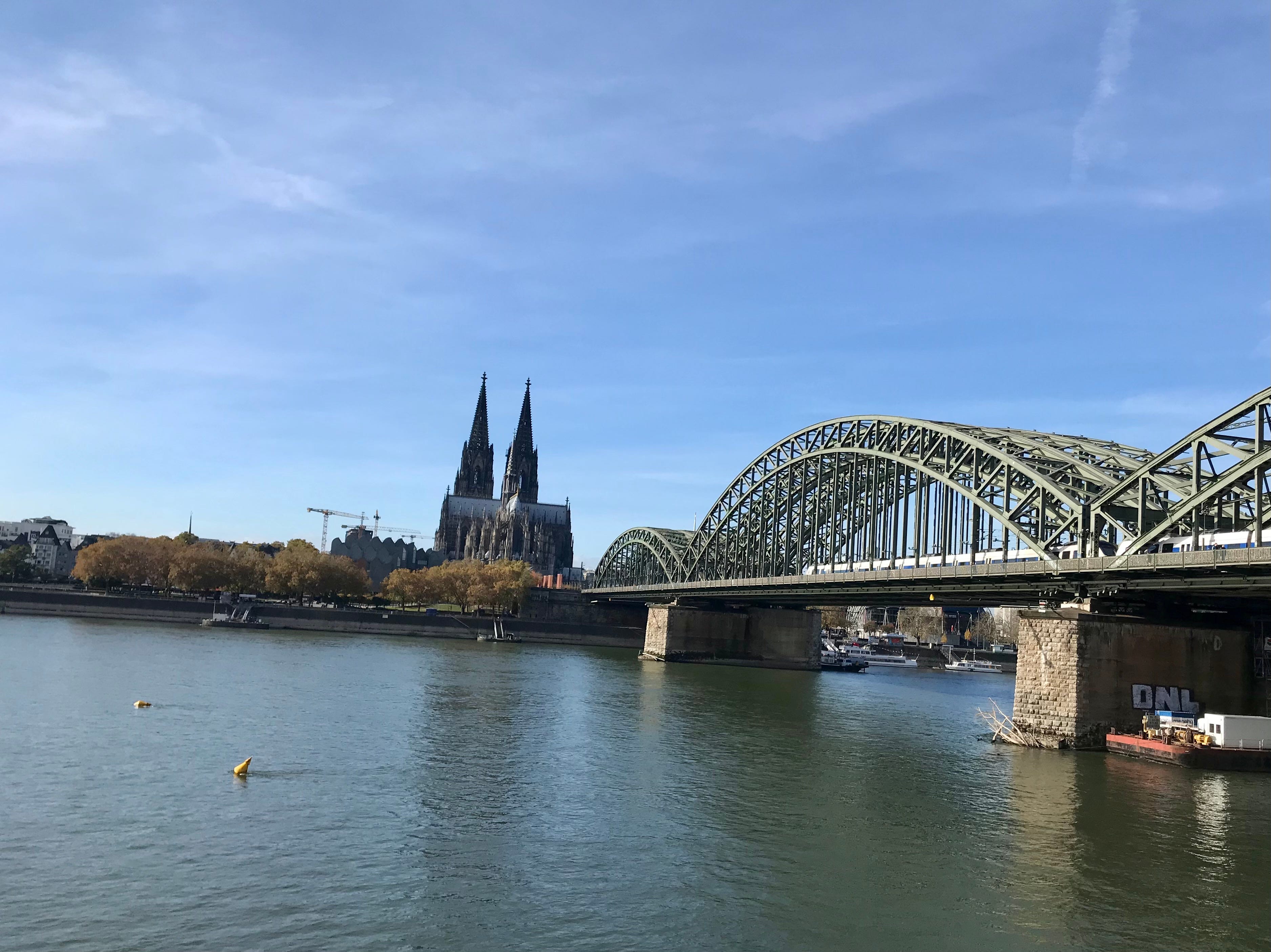
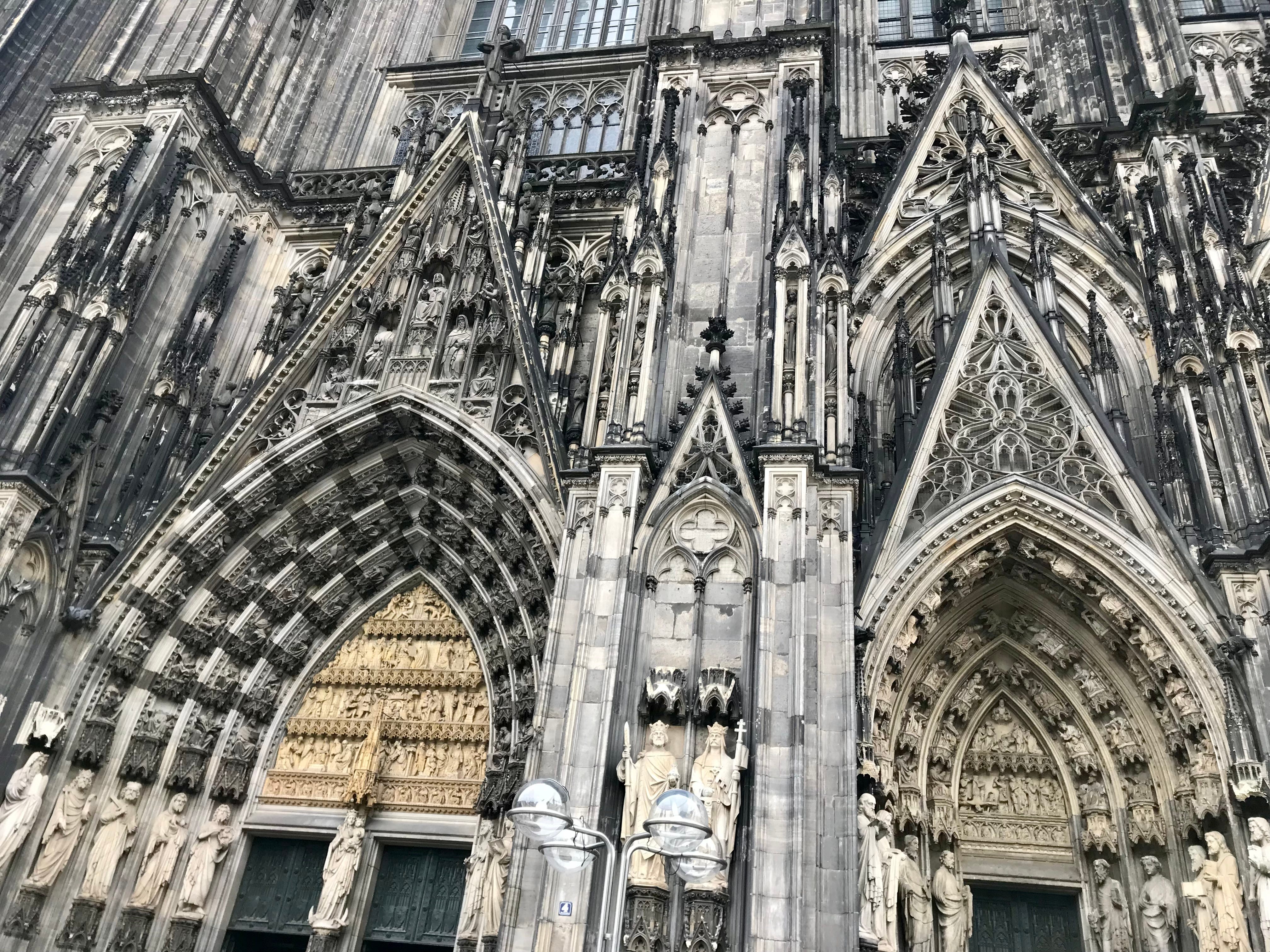
On Wednesday, I hit my first tourist attraction: the cathedral. This, I am told, is the biggest tourist attraction in all of Germany, with an average of 20,000 visitors per day. When you pull into Köln on the train, you quickly see why: scale-wise, its presence in the city verges on…the supernatural. Imagine what Westminster Abbey would look like if you placed it in Ann Arbor. That’s sort of the effect of the cathedral in Cologne. Apparently, after the war, when the city had been flattened, the cathedral had an even more outsized presence.
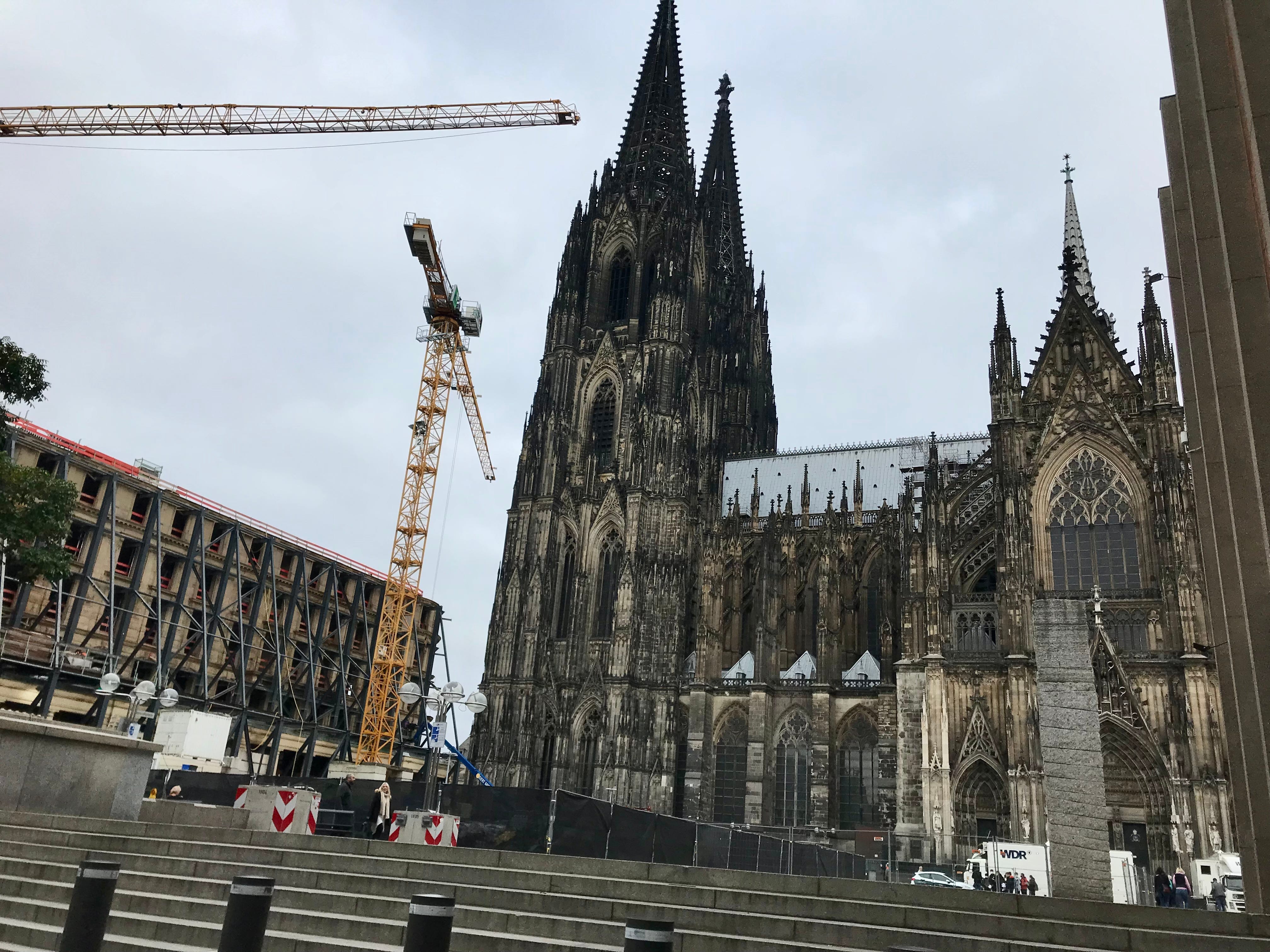
So, what can I say about it. It’s a dark and monumental edifice, and uniformly Gothic. Architecturally, this is not a palimpsest of styles and periods, even though it took more than six hundred years to build; the nineteenth-century builders stuck faithfully to the original plan, and the result is almost oppressively static in style. The outside is a mass of flying buttresses, ornate saintly carvings, and the pointiest stippled arches and spires. Clearly the scale for ranking this one is not how beautiful it is, but how imposing.
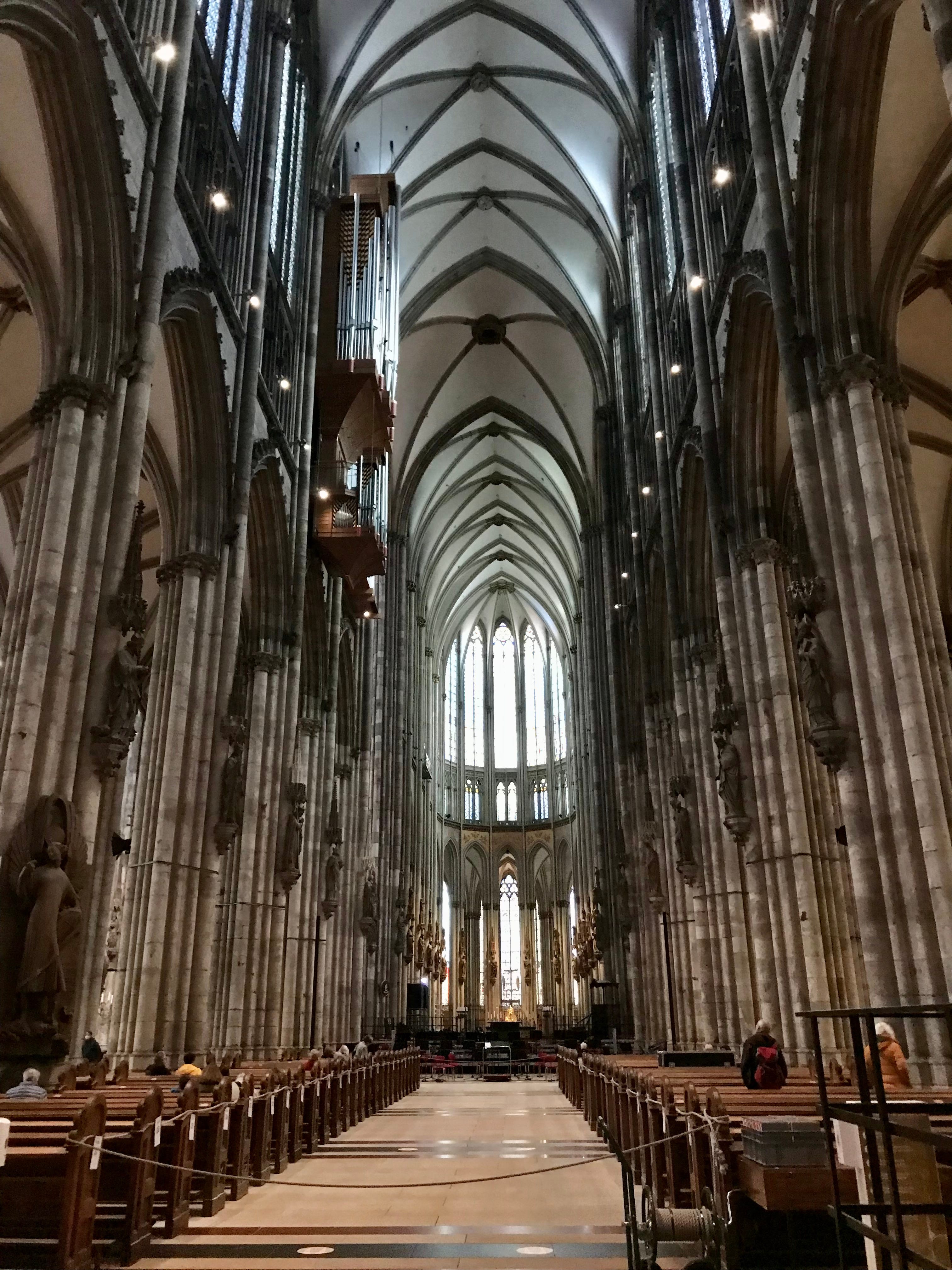
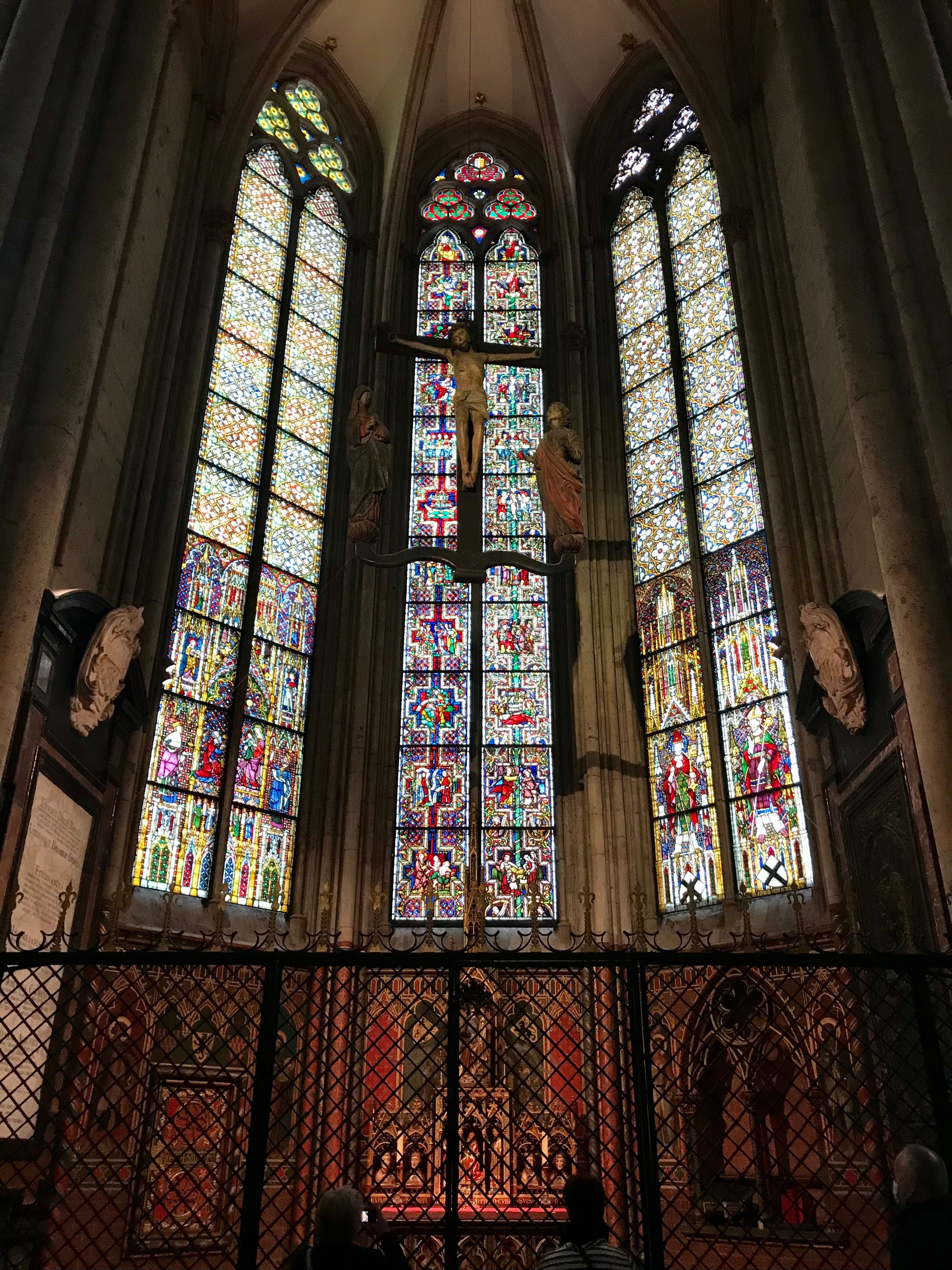
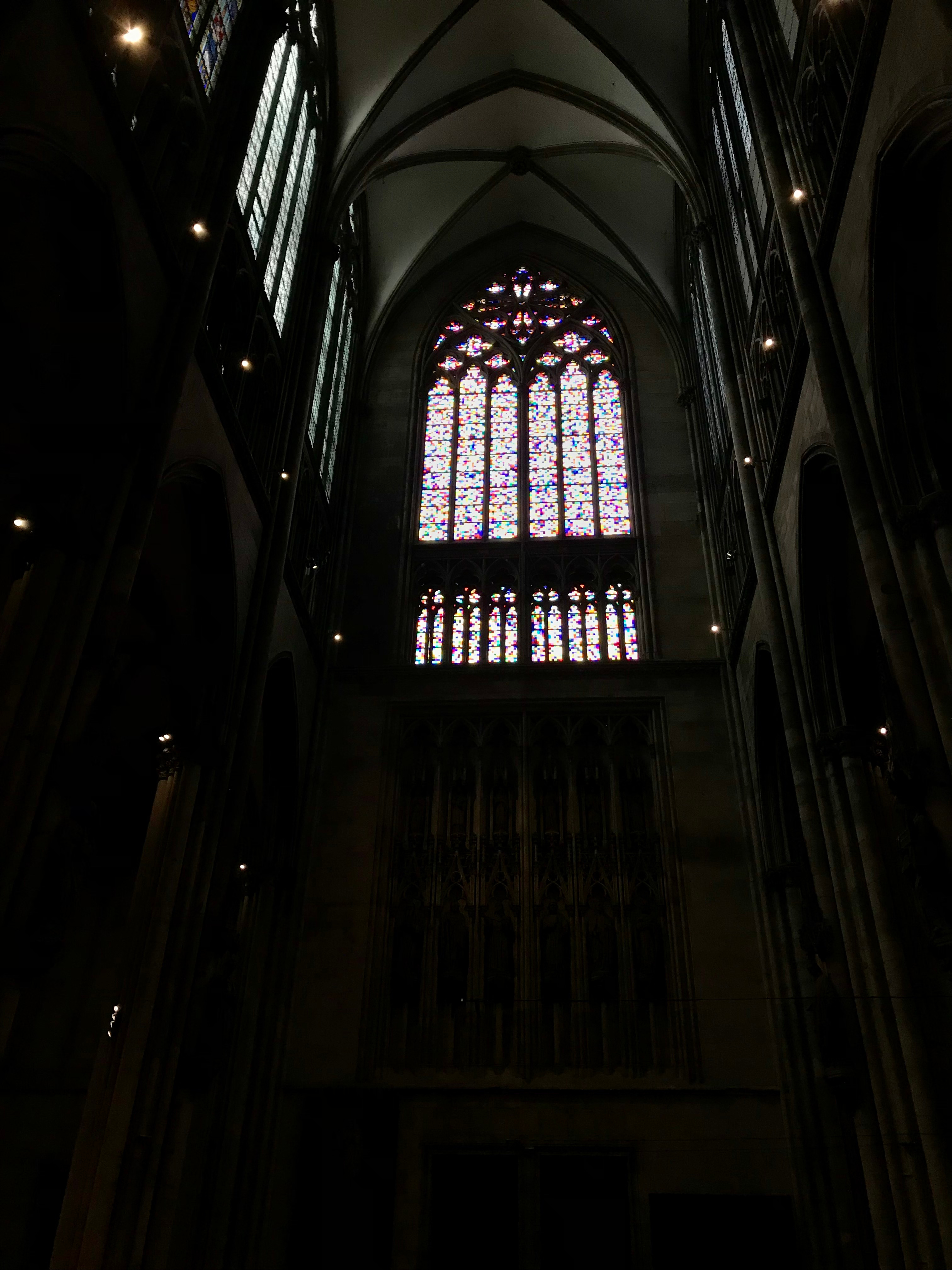
The inside is cavernous: dark and full of austere treasures, including windows from many times and places. The oldest stained glass is from 1260, which, if you think about falling bombs, is remarkable. Donors of the newer windows, which are colorful but muted, include crazy King Ludwig. The shiniest and newest stained glass is an abstract computerized confection, which uses colors from other of the cathedral’s windows and a random number generator to determine which colors go where (or something like that).
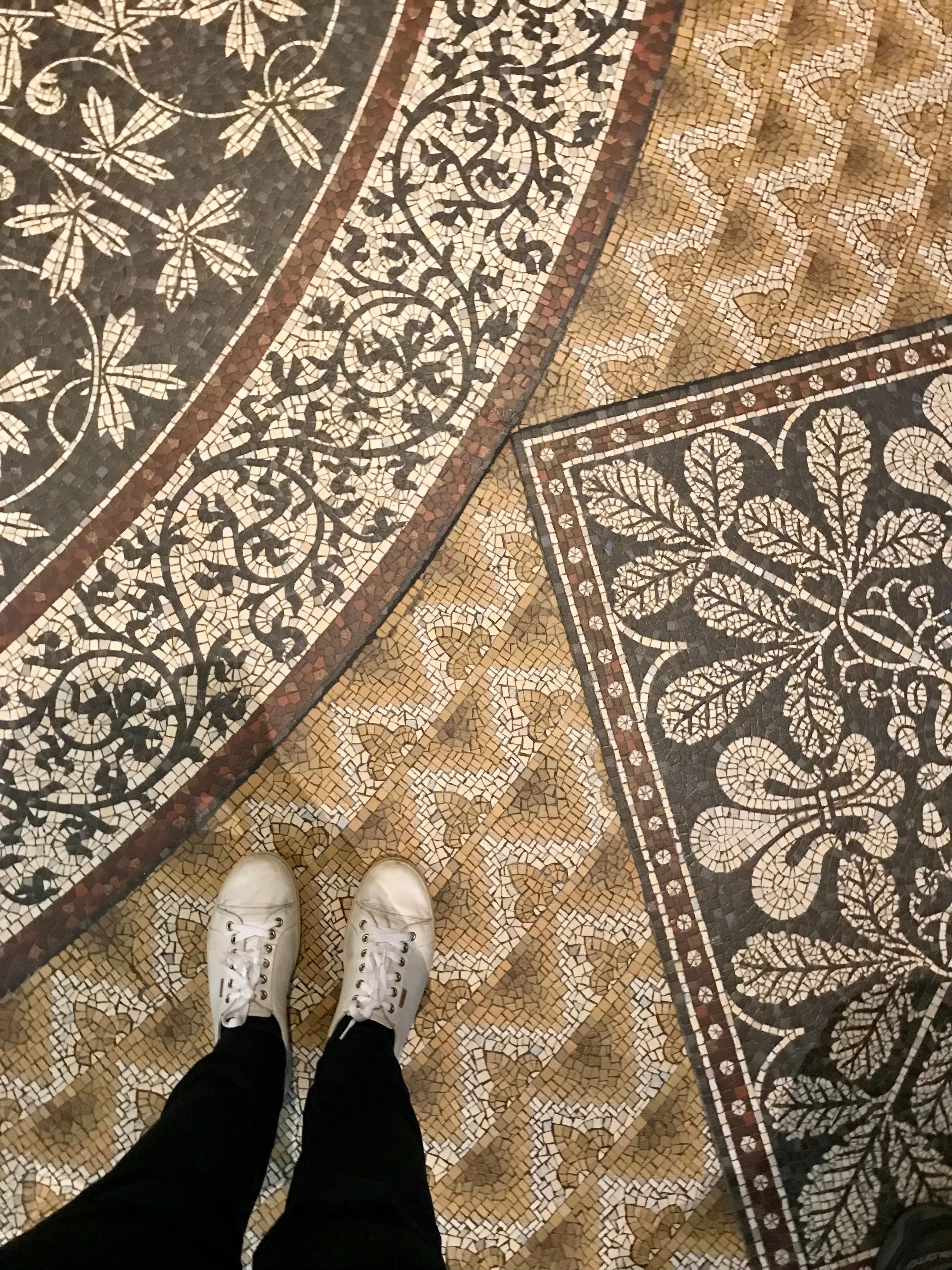
Cologne seems to be big on relics, and some having to do with the magi are in a Versaille-level golden box at the altar. There are also incredible nineteenth-century mosaic floors, which are unlike anything I’ve seen in a cathedral before (it’s usually marble or some other stone).
At noon, there was a service, and I got to hear one of the organs play three different pieces. The reverb in the cathedral must have been seven seconds. Whenever I hear an organ in a cathedral, I understand why the world converted to Christianity. If you want to hear what it sounded like, here are two recordings.
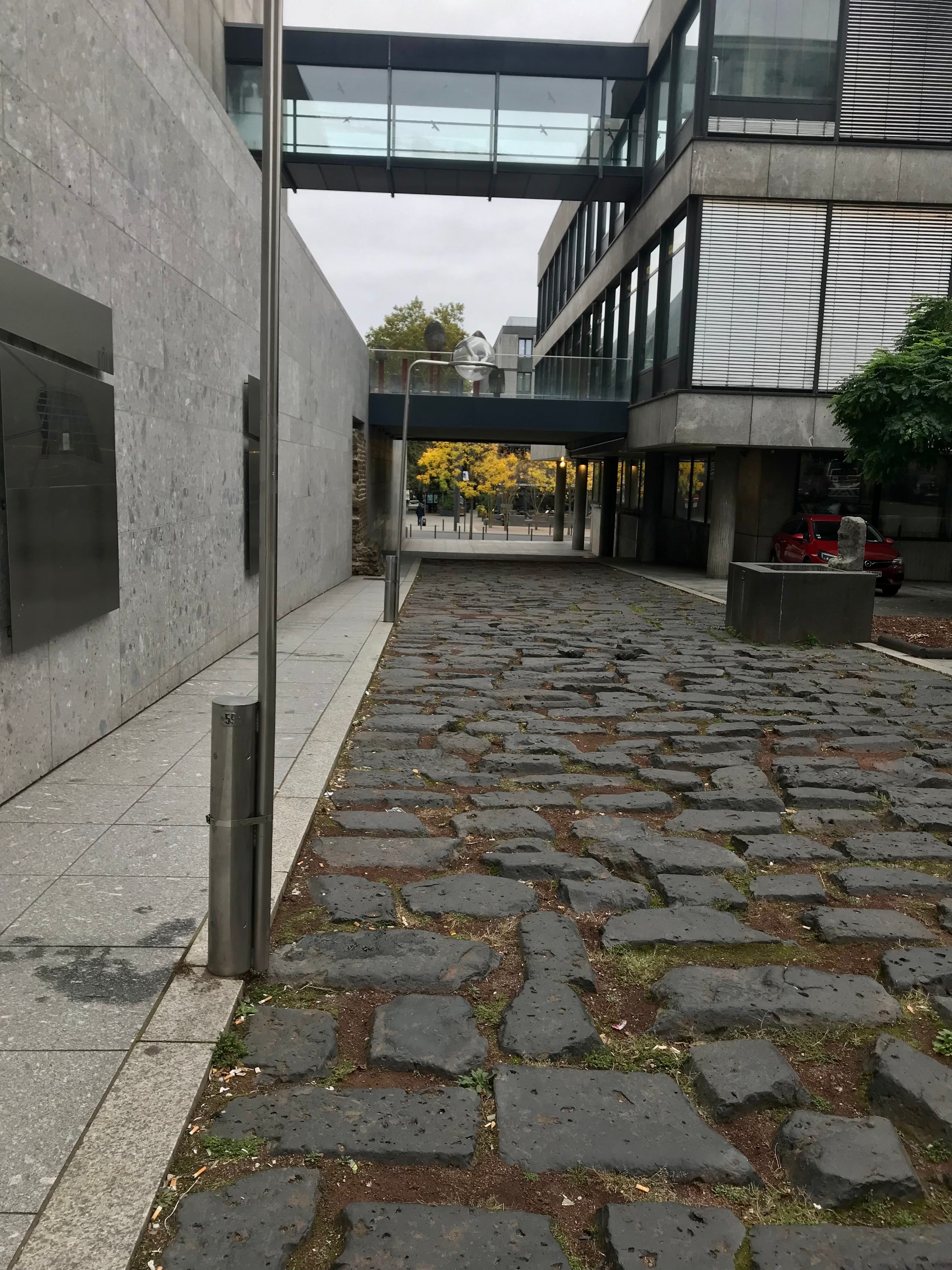
After my visit to the cathedral, I walked by the Philharmonic and established that there were no concerts that my work schedule could accommodate, and then past the Roman-Germanic museum, and down a Roman road that has been preserved outside. (Cologne has tons of Roman history, which I didn’t end up exploring while I was there.)
Before retiring to my apartment for my work day, I walked around the old town, which is an area of pedestrian-only streets with the usual array of European clothing and designer stores. Very pleasant, but nothing special to notice there.
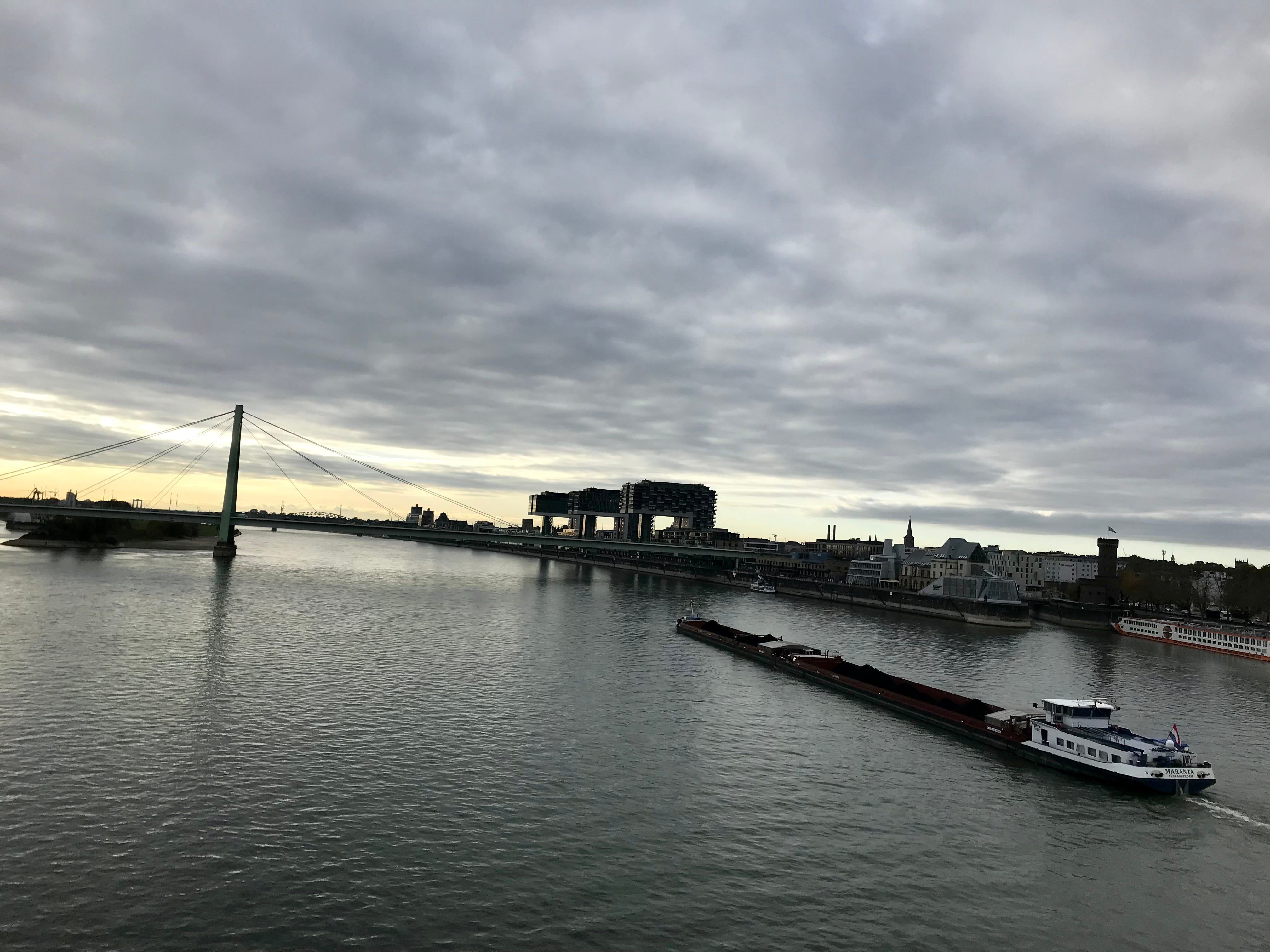
I should say that to reach the cathedral, I walked over the Rhine for the first time in my life, which is an experience of its own. The Rhine in Cologne is extremely wide, and it must have been fifteen or seventeen minutes walking from one side to the other, across a bridge with fast car traffic and a lot of wind. Large barges on the river in view, and other bridges that cross it up and downstream.
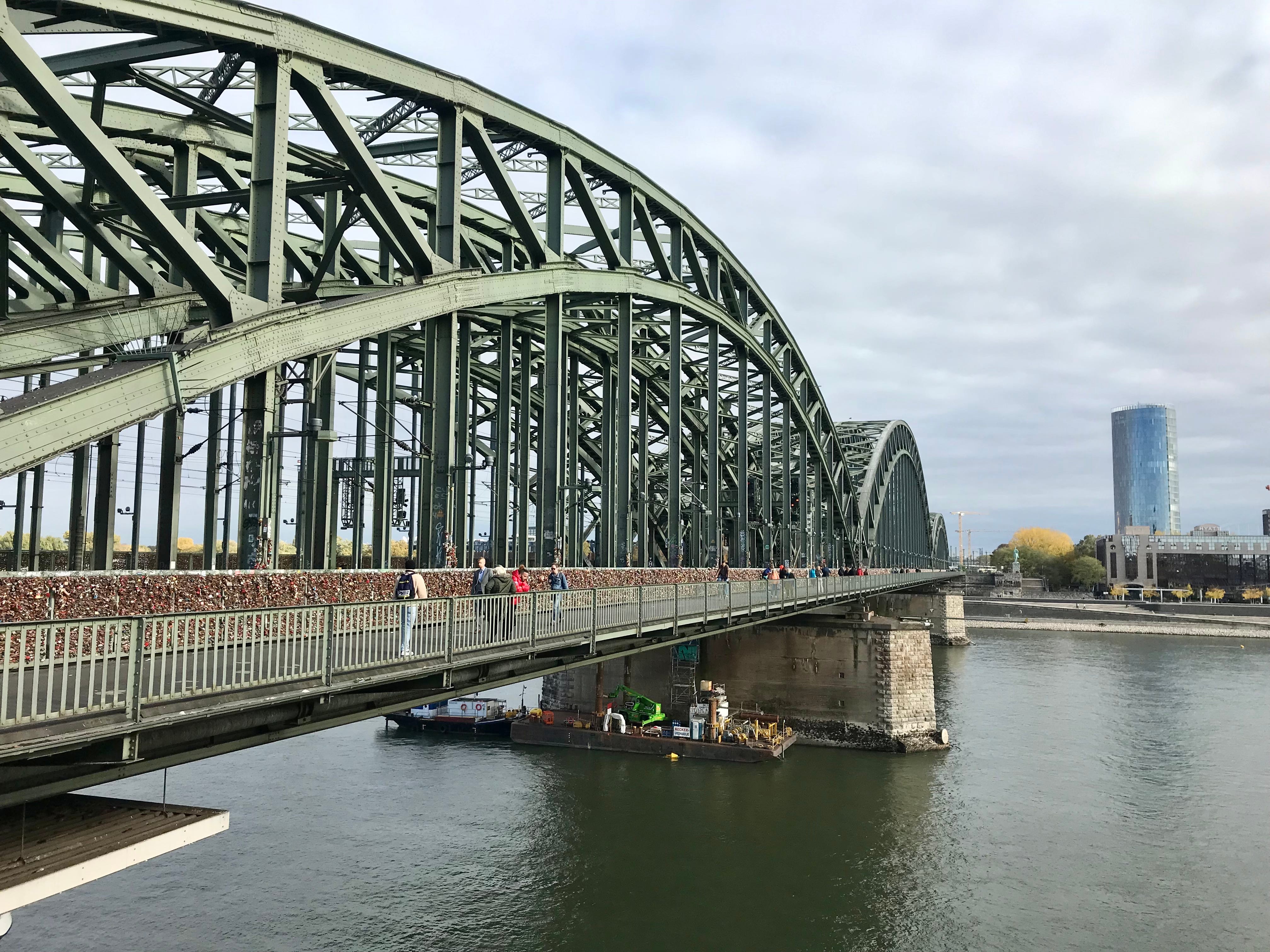
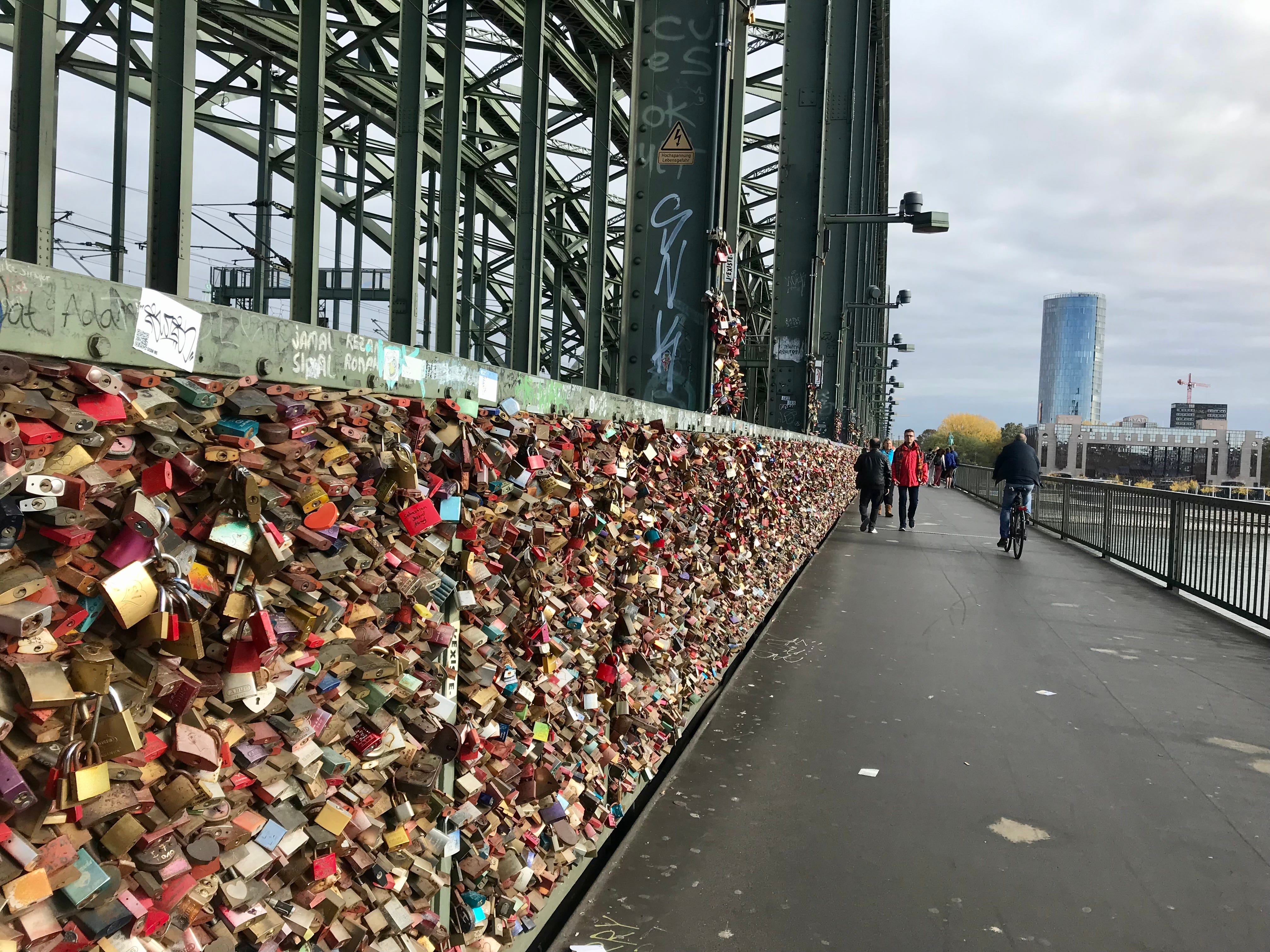
After seeing the cathedral, I walked back over a different bridge: the Hohenzollernbrücke, which is for rail traffic and pedestrians only. Running along one side are what must be hundreds of thousands of locks, or maybe millions of them, engraved with couple’s names and dates. The oldest one I saw was from 1978. One has seen locks on bridges before, of course—notably, in Paris—but this was sort of special because of how long the bridge is, and therefore the sheer number of colorful symbols of eternal love to witness. (Apparently, the city made an attempt to remove them because of concerns about their weight on the bridge, but people objected.)