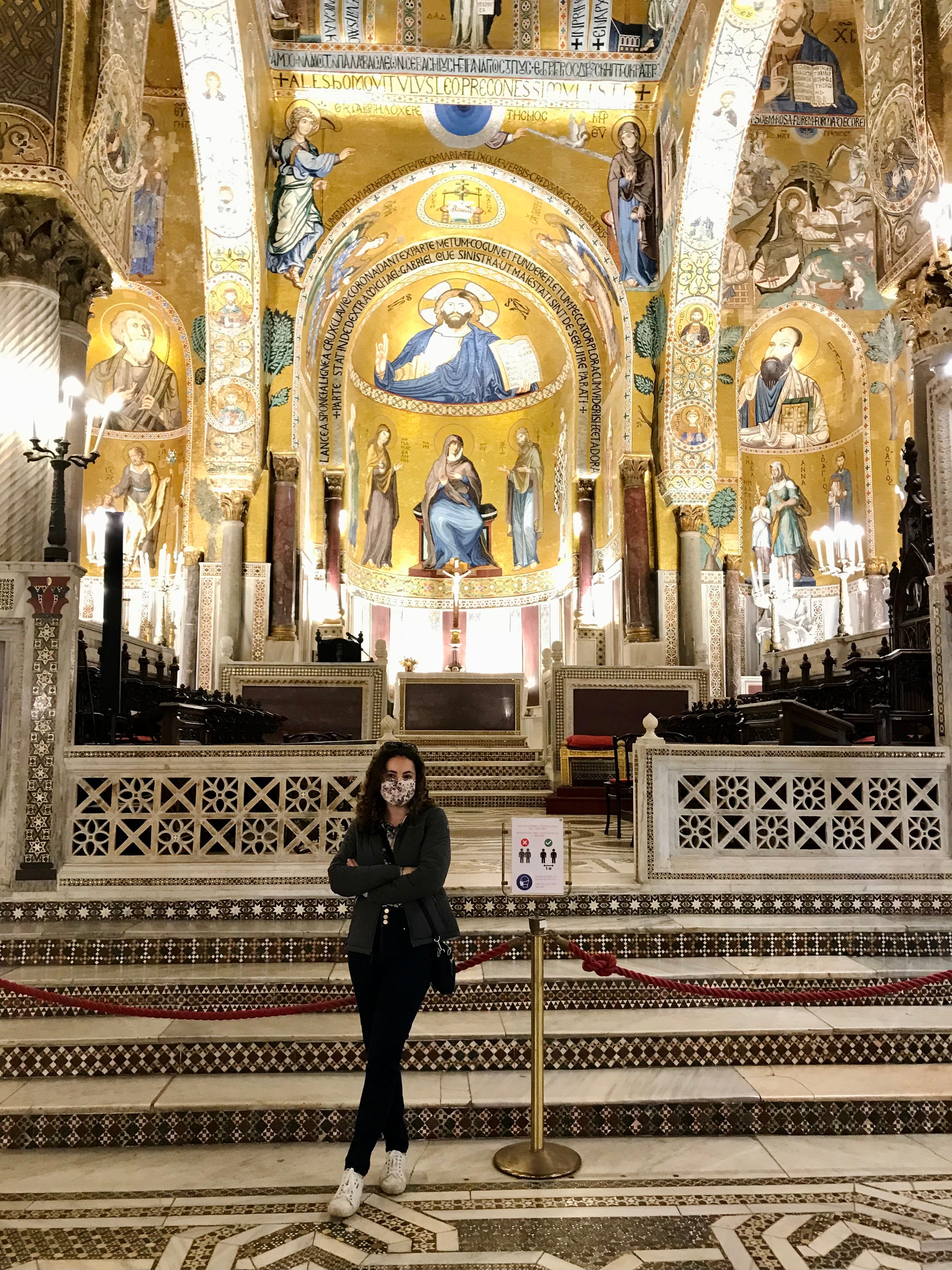
cappella palatina
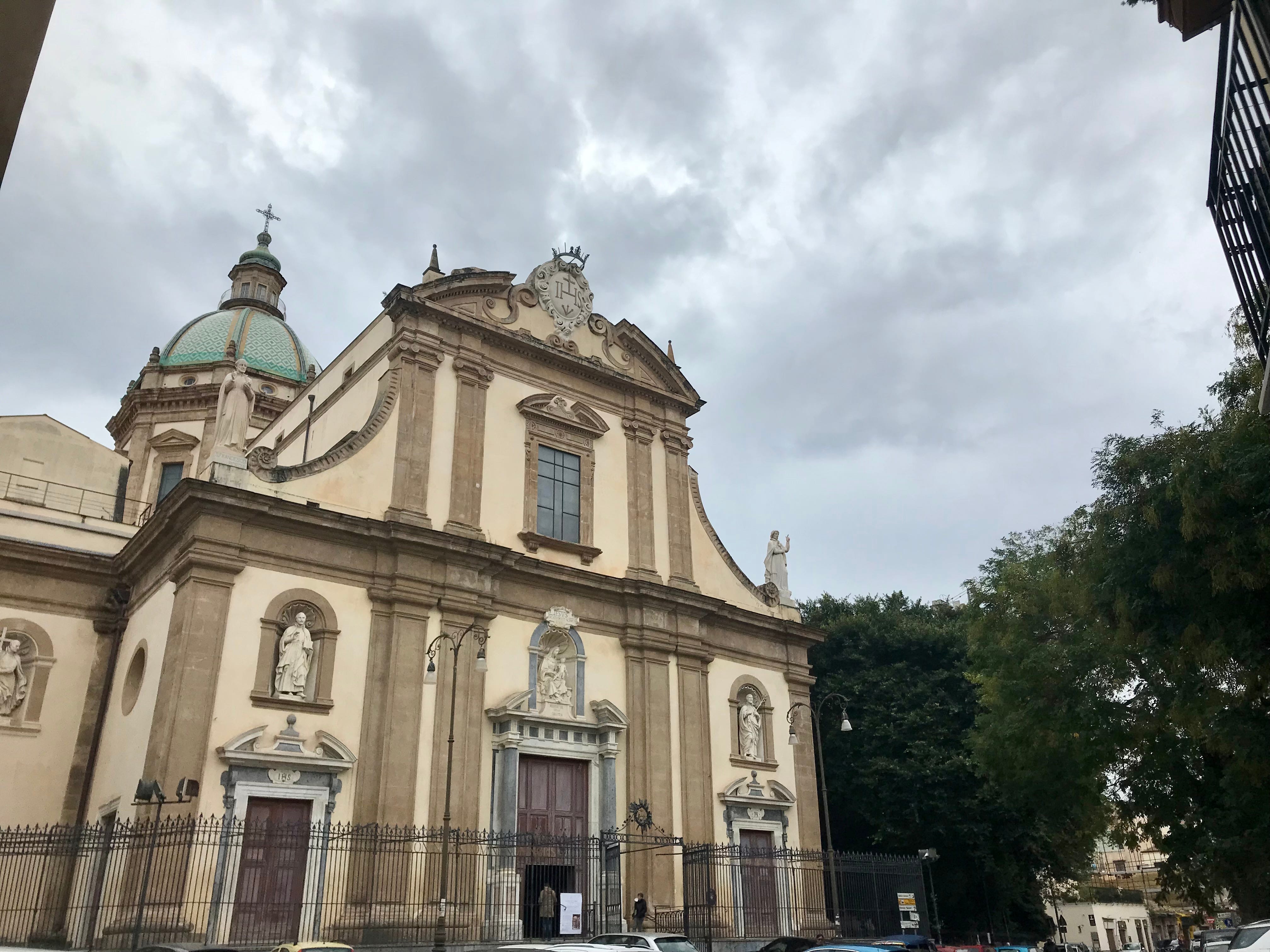
preceded by the chiesa del gesù

On Thanksgiving morning, I walked to the Chiesa del Gesù, which, like many churches in Palermo, is hidden among other buildings and faces a small square. It has a relatively modest Baroque facade.
Inside was anything but modest. This place is one of the prototypes/archetypes for the incredibly flamboyant Sicilian Baroque style.
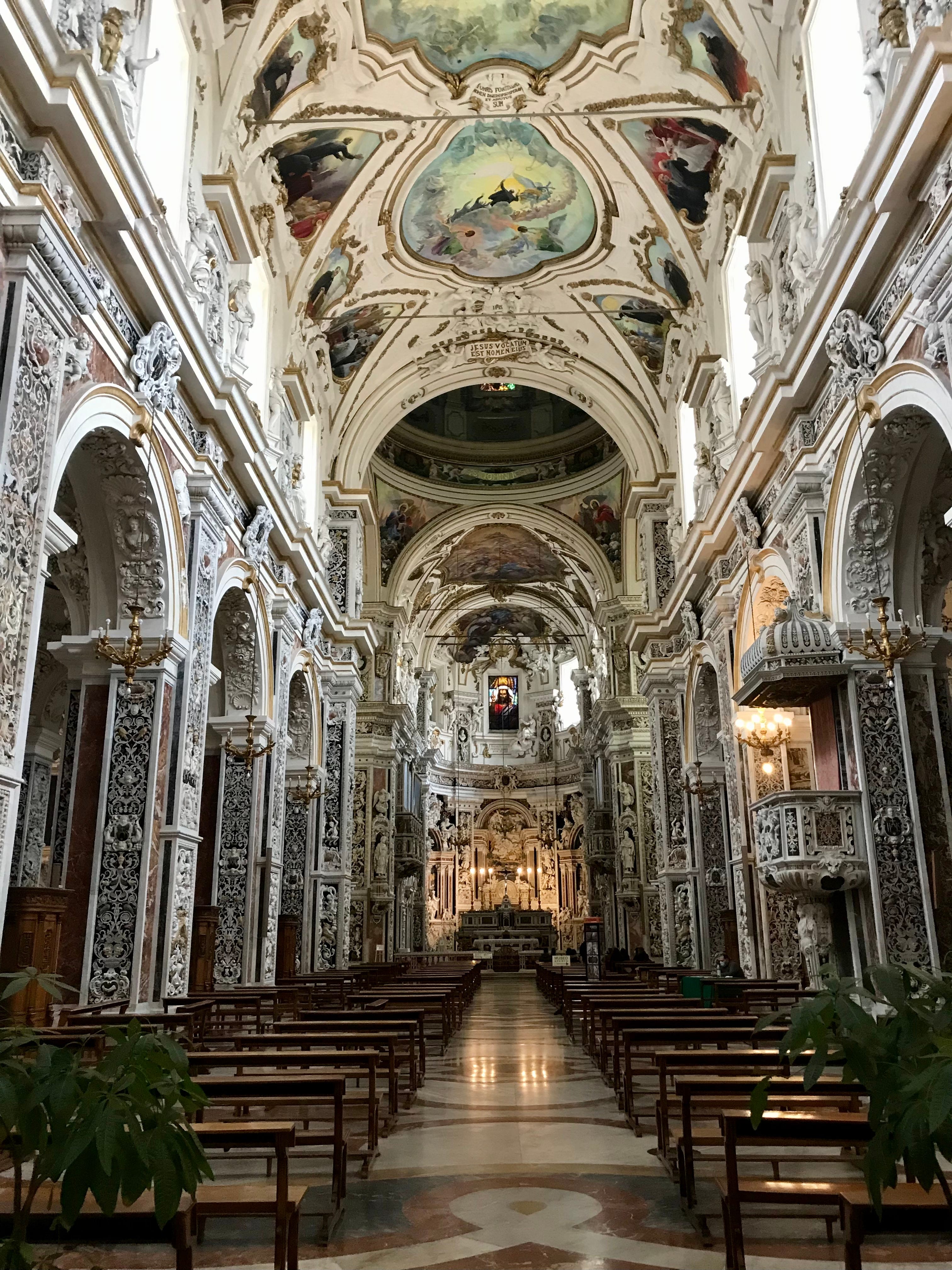
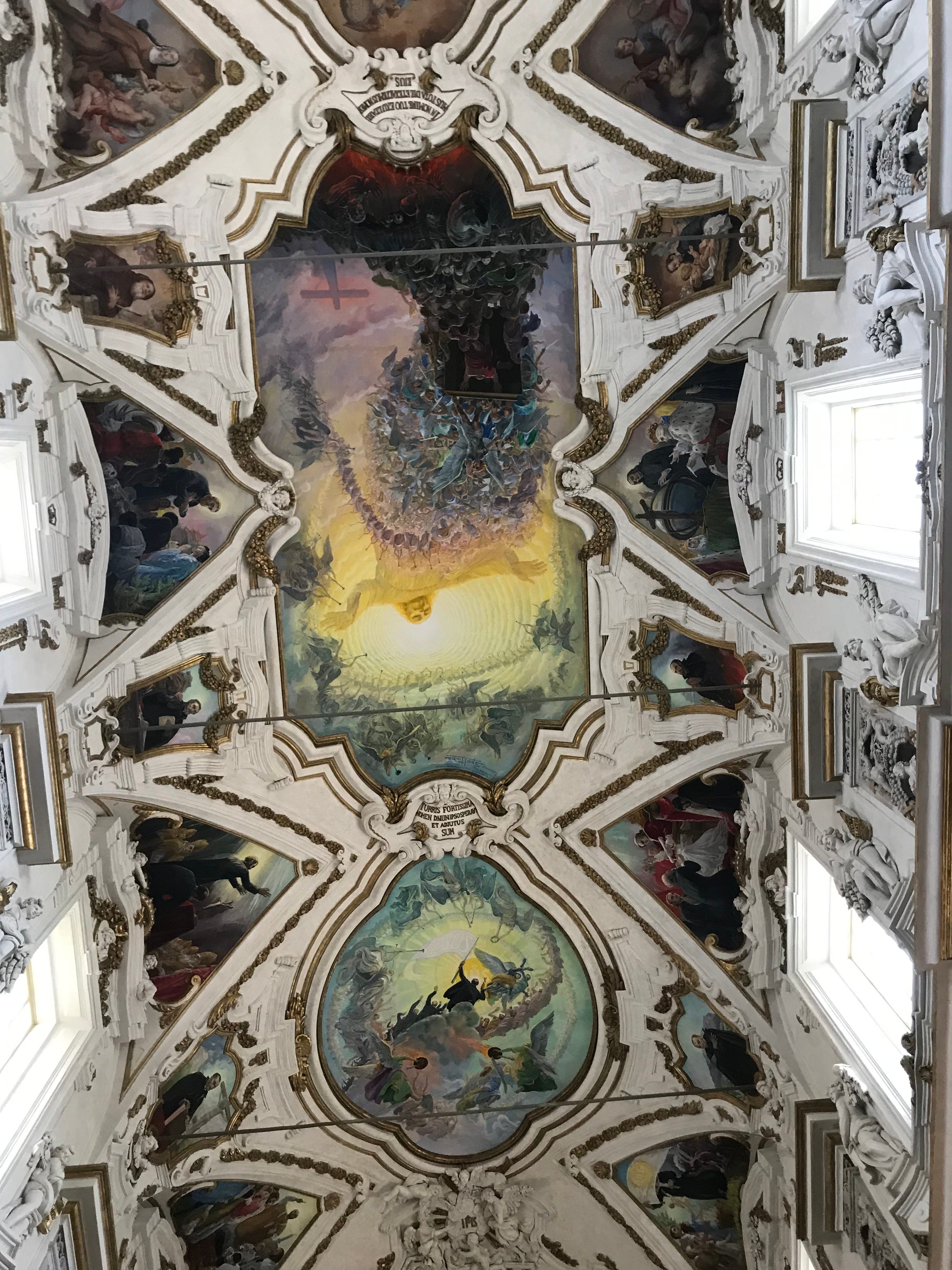
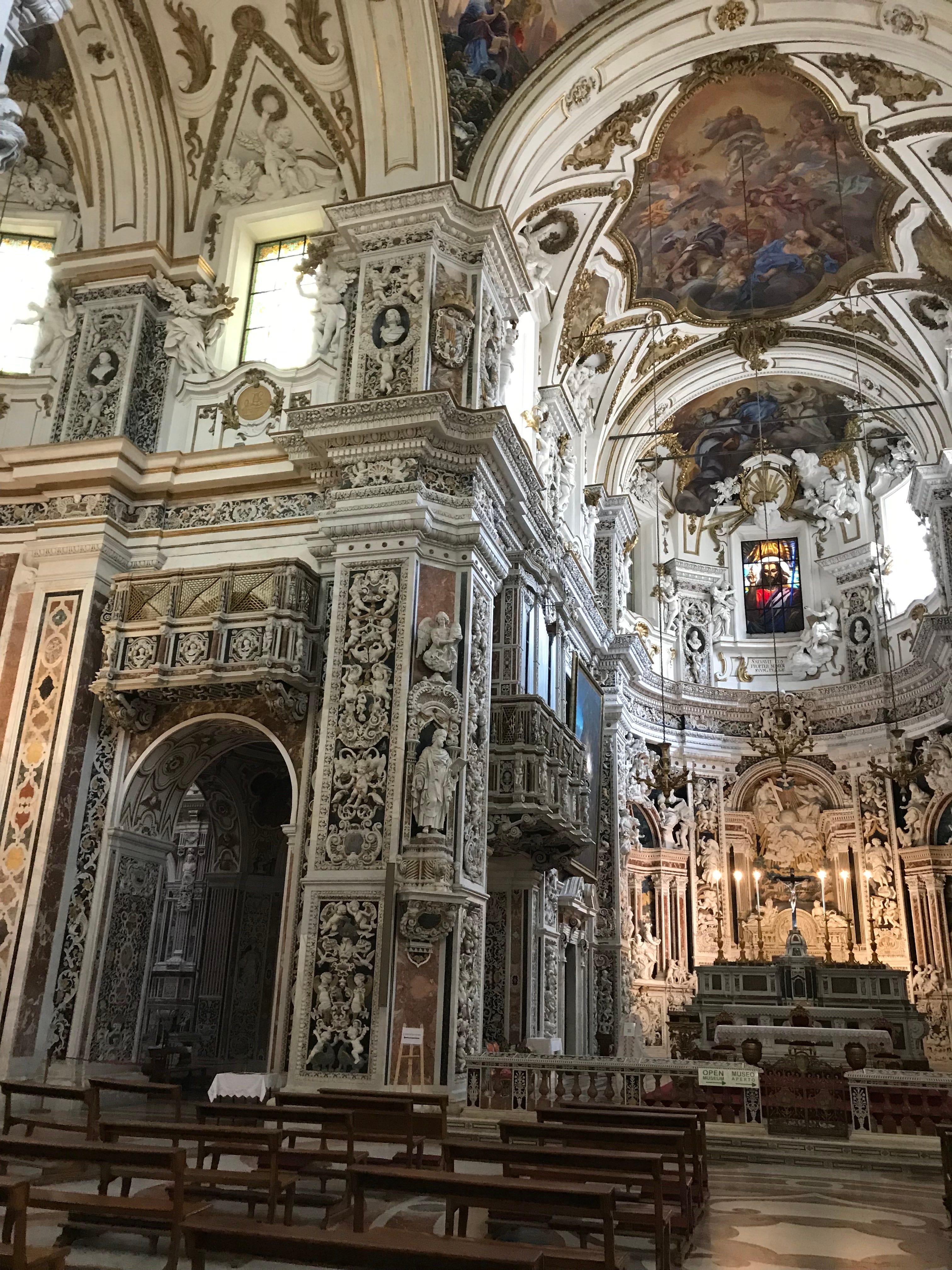
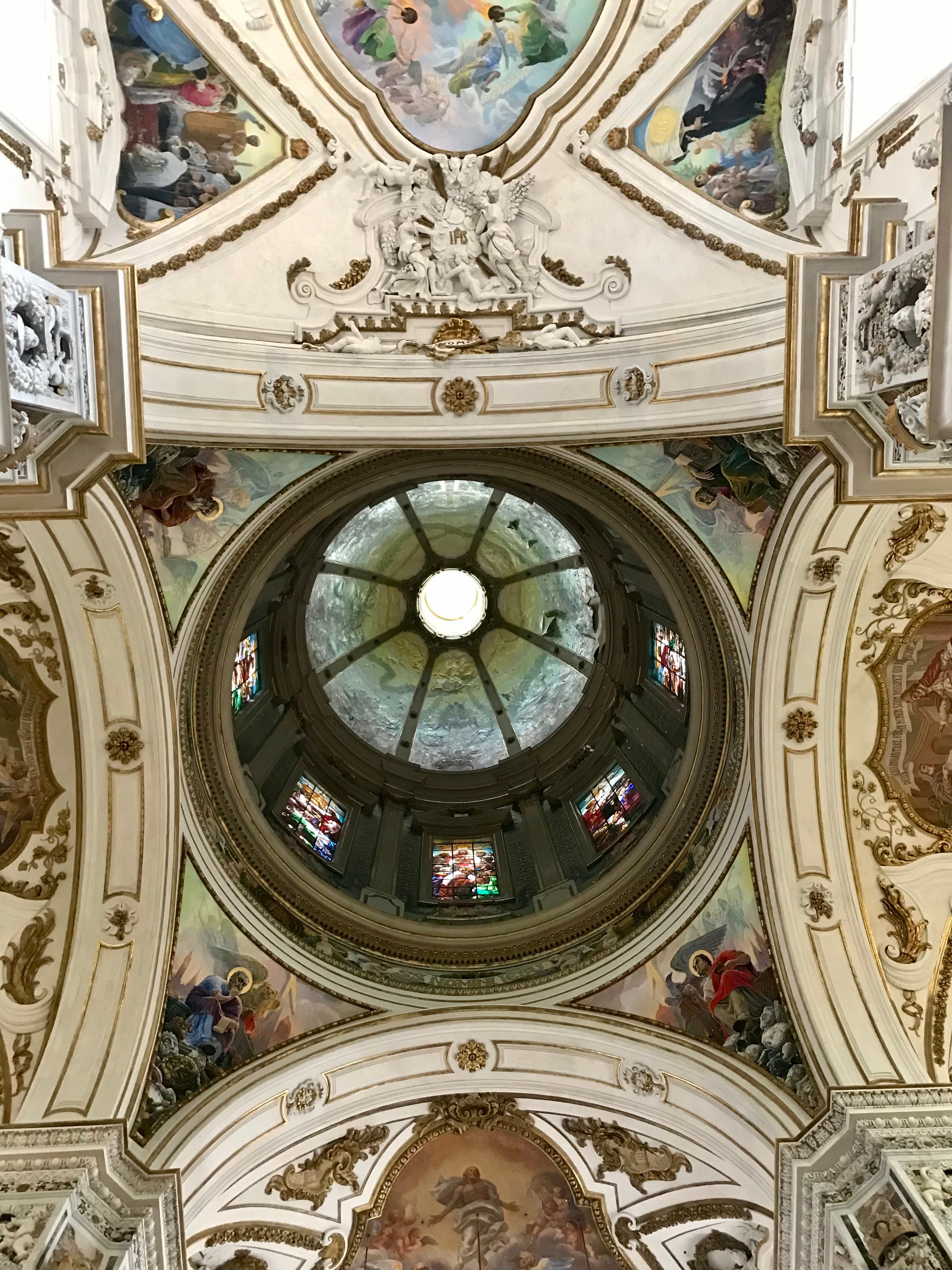
The detail is really overwhelming. So are those in the gold-drenched Catholic churches of Rome, say, but the thousands white marble baby angels plastering every surface have their own specific effect. Excess in architectural form.
Next, I walked across town to the Norman Palace, which houses the Palatine Chapel. The palace complex has been on that spot since the eleventh century. To get to the chapel, you walk into the palace courtyard and up grand stairs to the second story, and then through a door that, from the outside, does not give the impression that it leads to one of the most opulent and breathtaking sights in Palermo.
The chapel, per the book jacket of “The Cultures of His Kingdom: Roger II and the Cappella Palatina in Palermo,” by William Tronzo, was:
created as an exemplum of the great multicultural experiment of King Roger[; and then] it was reframed as a purely Christian edifice by subsequent generations in order to fit a concept of the “Western” cultural tradition, to which the protean island of Sicily itself has also been made to conform.
King Roger is Roger II, a Norman conqueror who named himself king in 1130, and chose Palermo as his capital city. His court was culturally diverse—“titles such as ‘emir’ (Muslim), ‘logothete’ (Byzantine), and ‘camerlengus’ (Norman) vividly identified offices of diverse provenances” (135)—and so too was his chapel. It is a stunning mixture of styles, in one relatively modest-sized space: Byzantine mosaics with Islamic muqarnas and Norman arches; New Testament and Old Testament scenes labeled with Greek and Latin.
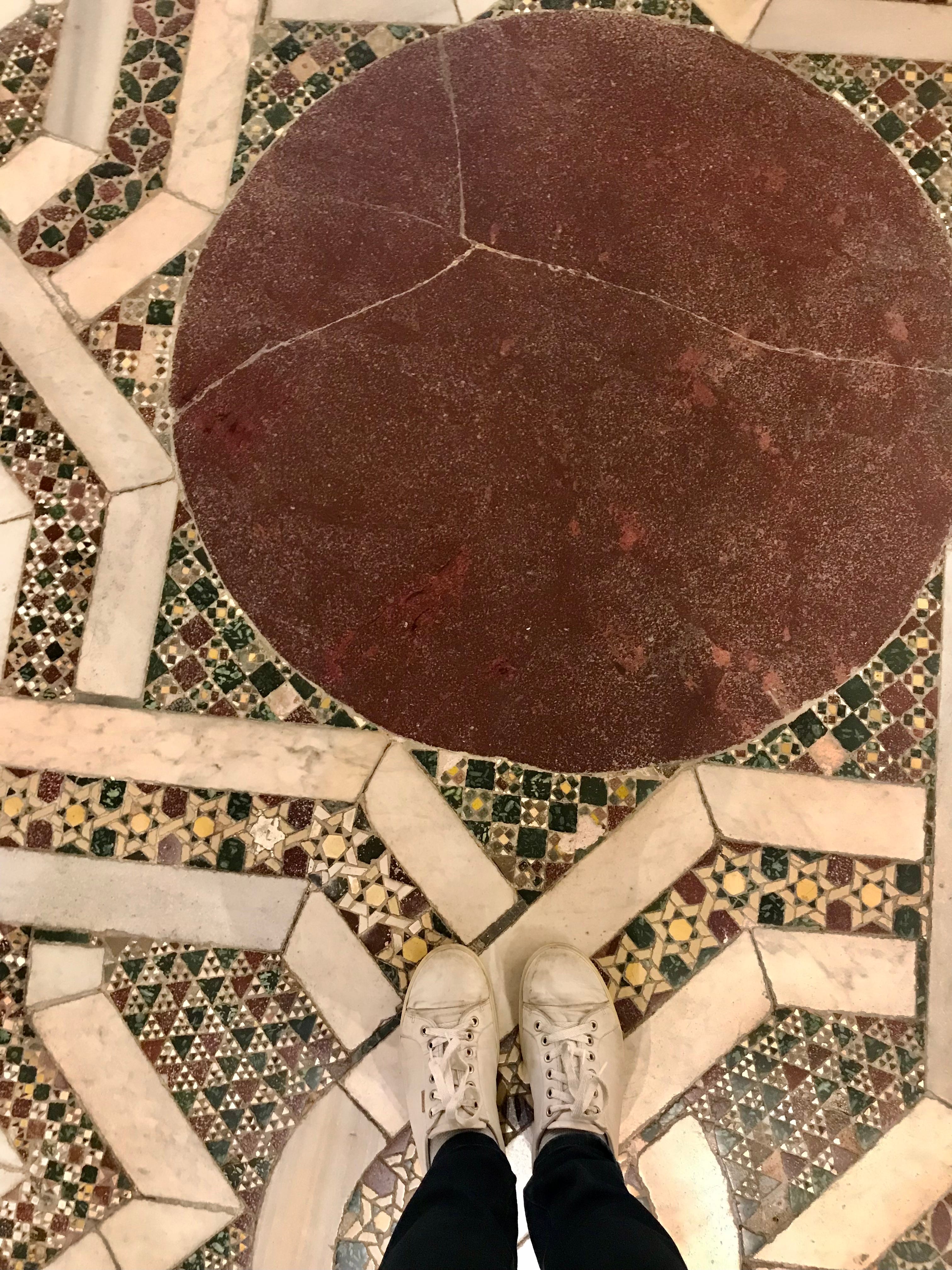
The first thing you see when you walk in is gold. It was so overwhelming that I actually closed my eyes and looked at the floor, because I wanted to make sure my first impressions of each part of the chapel were focussed and not a jumble. I went in order of the audioguide that I’d been given (for five euros, on top of the fifteen-euro entrance fee; my only complaint about this site is that they absolutely fleece the tourists). So, first, I focused on the floors, which are cut stone fit together, and original from the twelfth century:
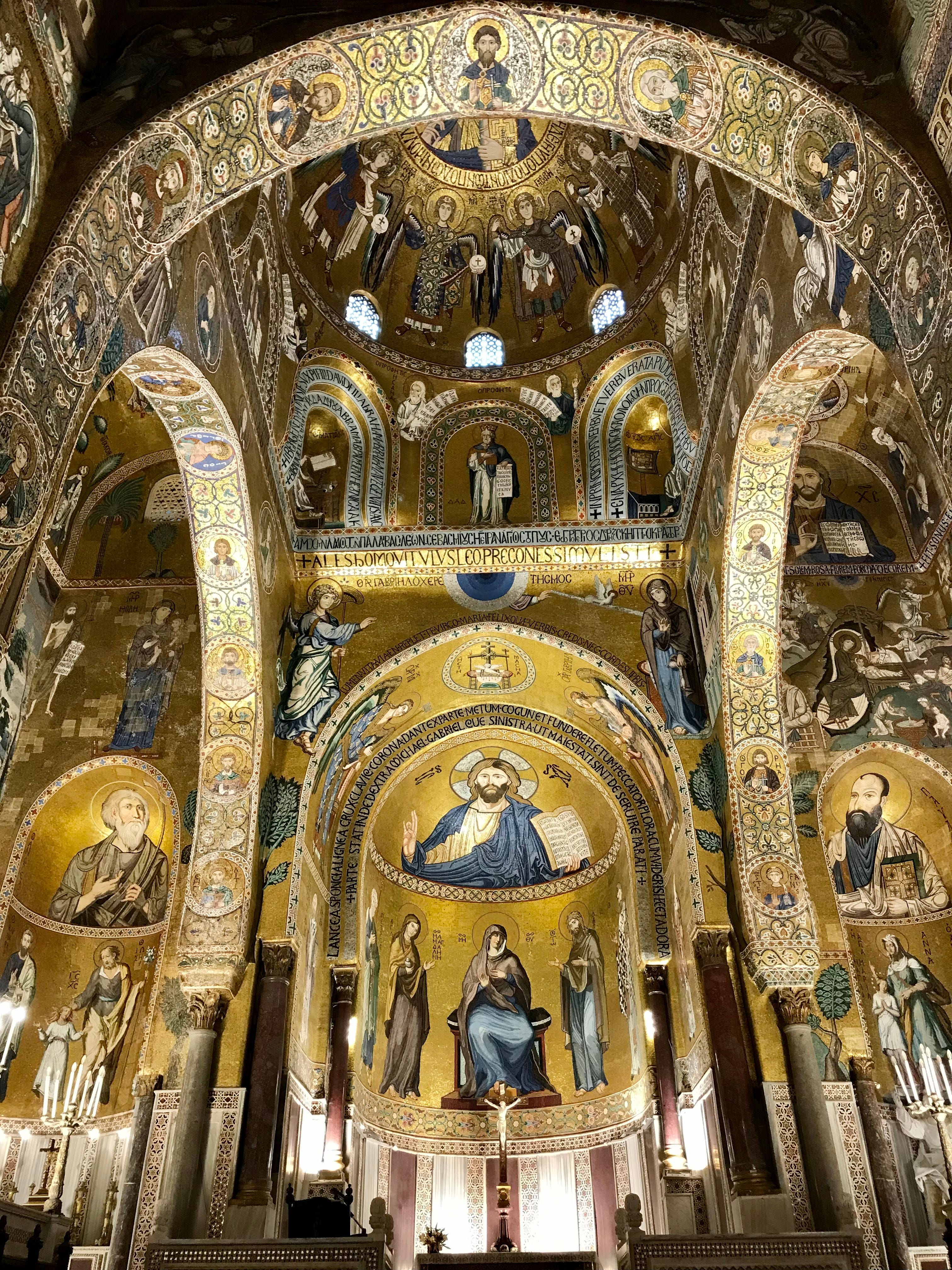
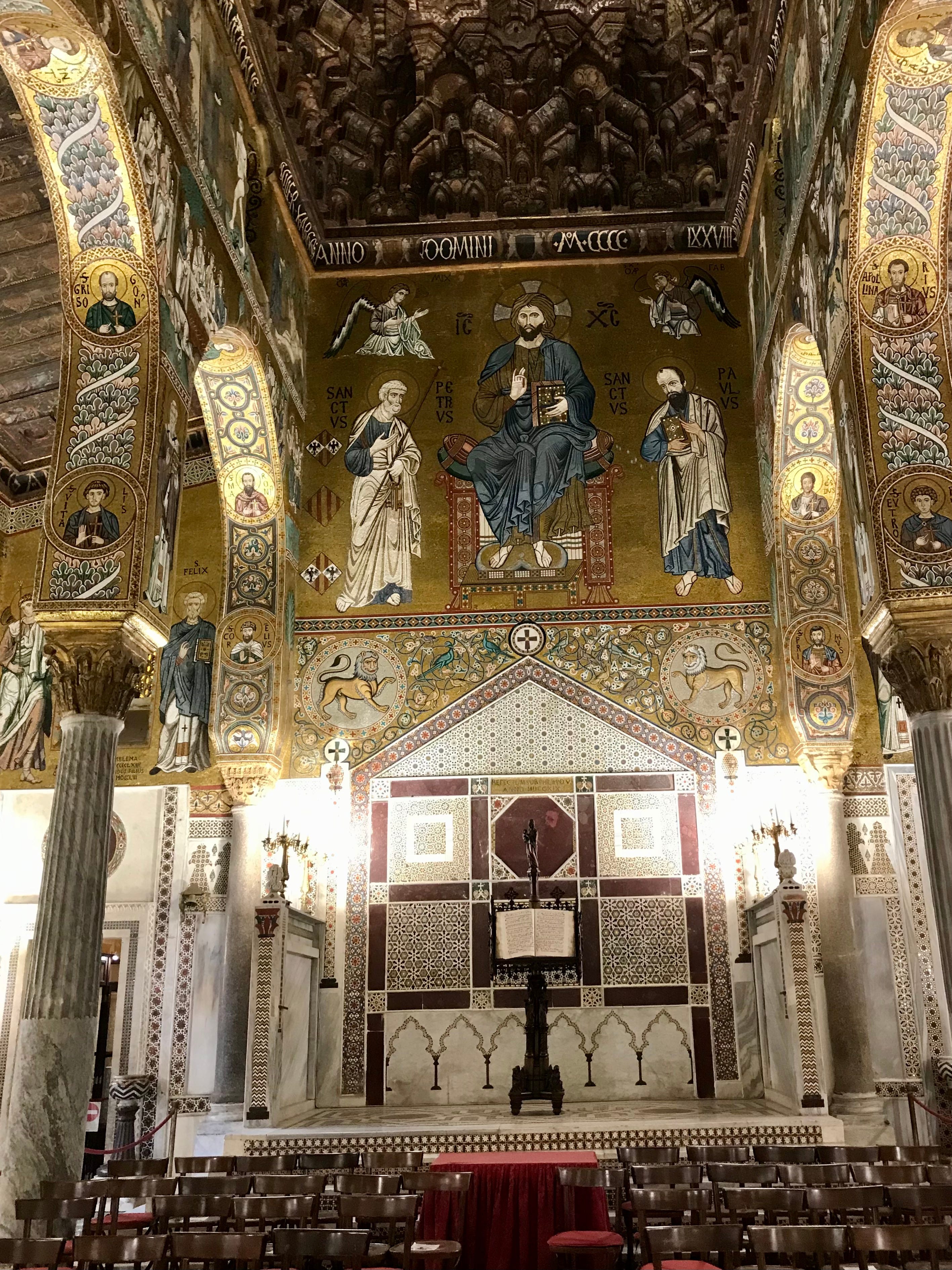
Then I stood at the front of the church and looked up, into the dazzling apse and dome, which features Jesus in the apse, Mary below him, lots of angels and prophets around the dome, Peter and Paul on either side of him, and thousands more figures in corners and on arches:
Then I looked towards the back, which has an inlaid marble and porphyry geometric design, surmounted by two lions and then a mosaic of the pantokrator flanked by Peter and Paul (who appear all over the chapel).
Then I looked at the ceiling, which is constructed of twenty-some muqarnas, up to three feet in depth (if I remember the audioguide correctly), and painted “in single figures or small groups, dancers, drinkers and musicians, a pair of women looking out of a balcony, a group of chess players, lions, birds and some other strange-looking beasts” (59).
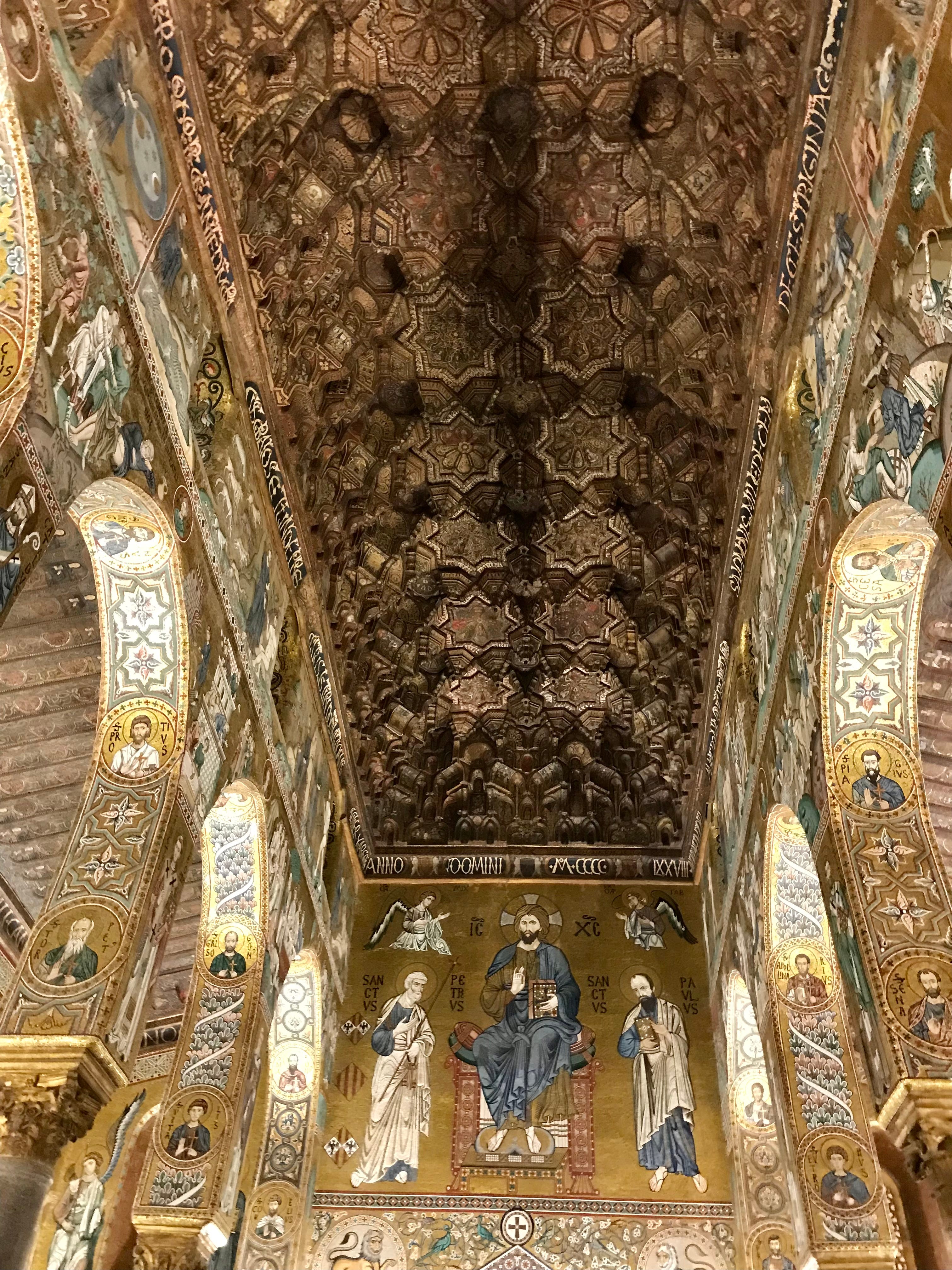
There is simply too much to say about this chapel, but I will limit my commentary to the fact that this space is, like the Córdoba Mosque-Cathedral, overwhelming in its fusion of styles that one never sees together, creating something entirely new. But unlike the Mosque-Cathedral, which is colossal, the Capella Palatina is the size of Dwight Chapel at Yale or smaller, and so the effect is correspondingly concentrated; and unlike the Mosque-Cathedral, which started as a mosque and became a church such that the architectural majesty reveals the progression of history, the Capella Palatina was built all at once, or nearly, and as such, it stands apart as a monument built for the purpose of blending styles (a smart move for an invader king with lots of different constituents to please). Under today’s lens of multiculturalism meaning peace and harmony, this chapel gets a gold star. So unexpected is the combination of the muqarnas and the mosaics that at their first, my brain was having trouble reconciling them; gradually as I revolved on the spot they began to settle together, and then I started to read the mosaics, which were my favorite part.
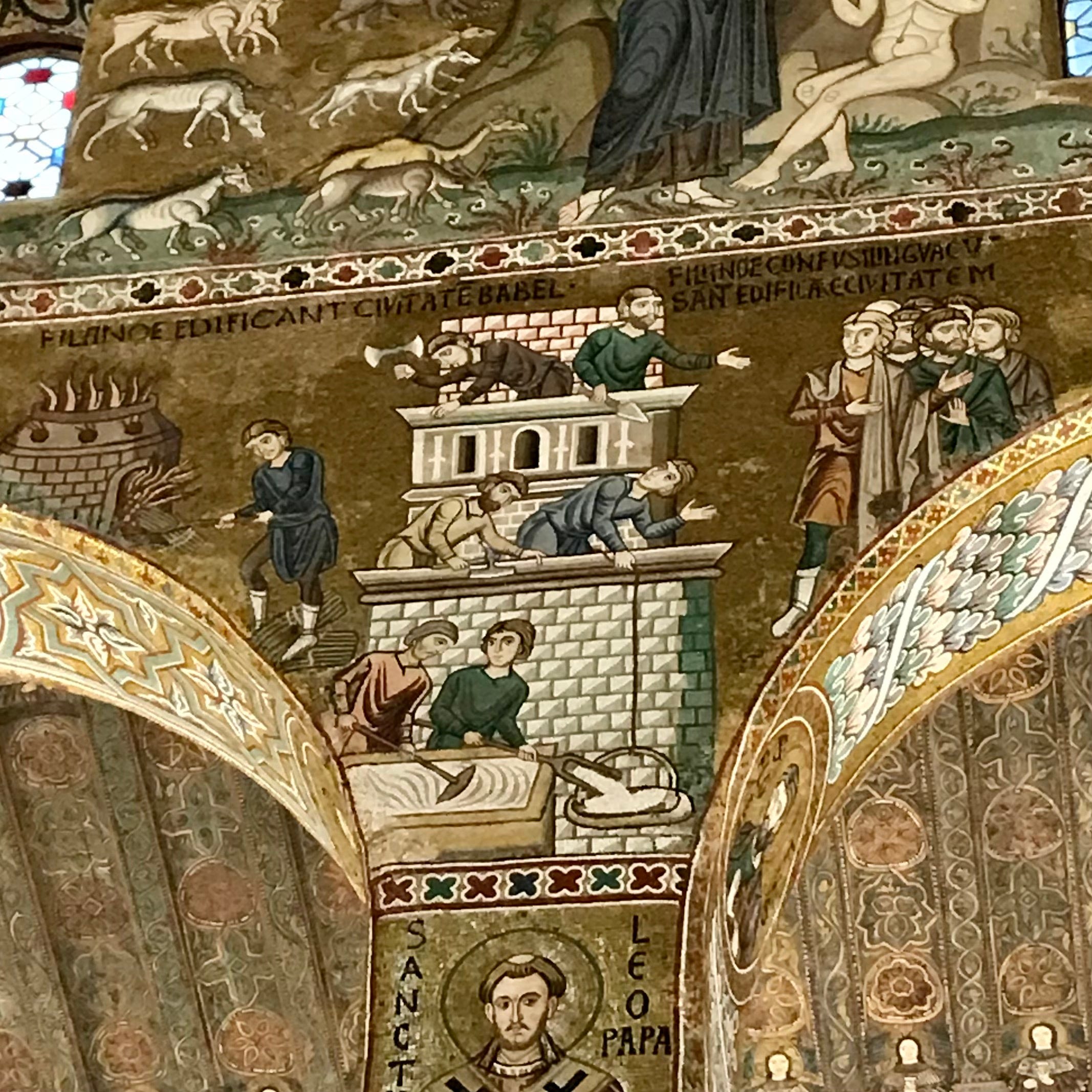
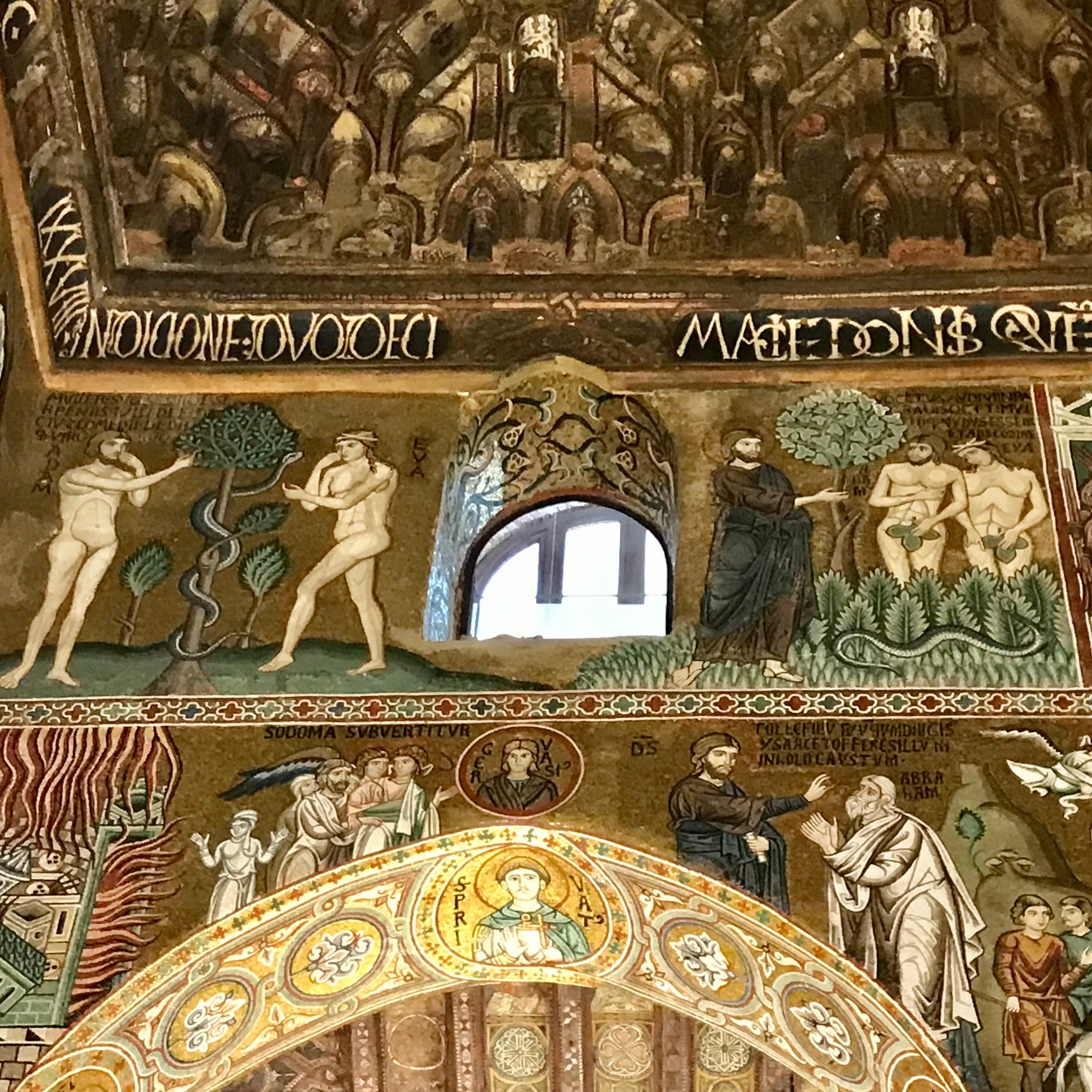
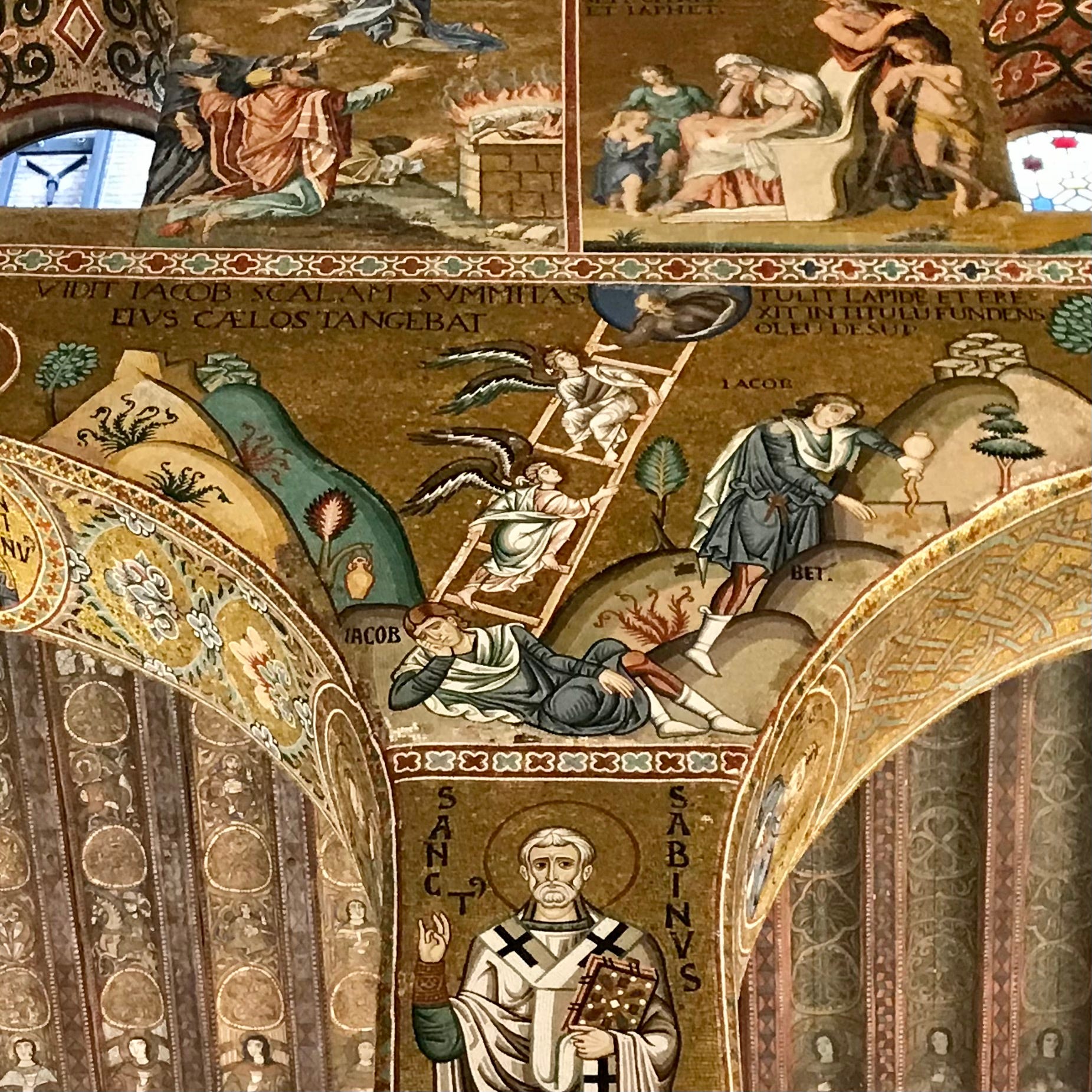
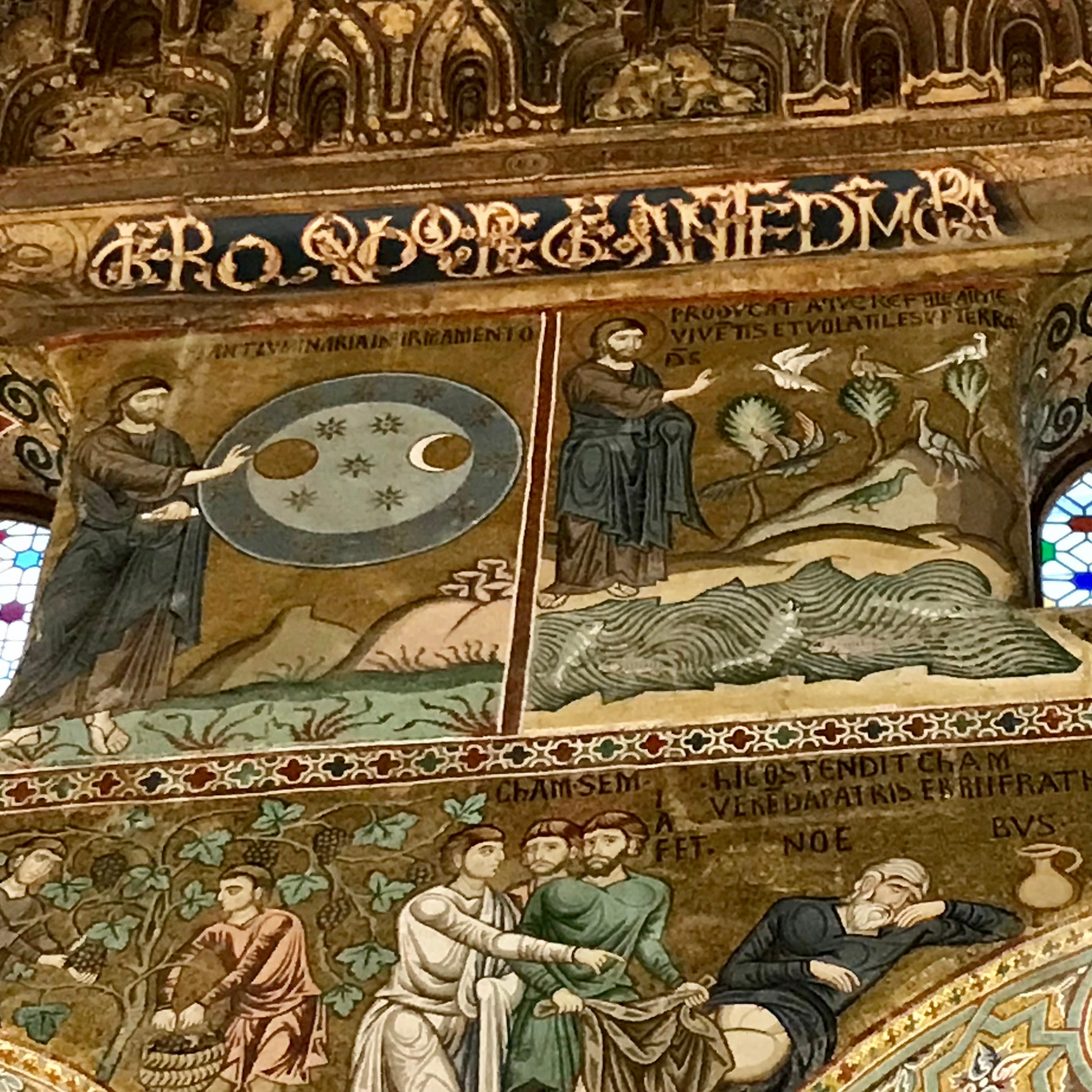
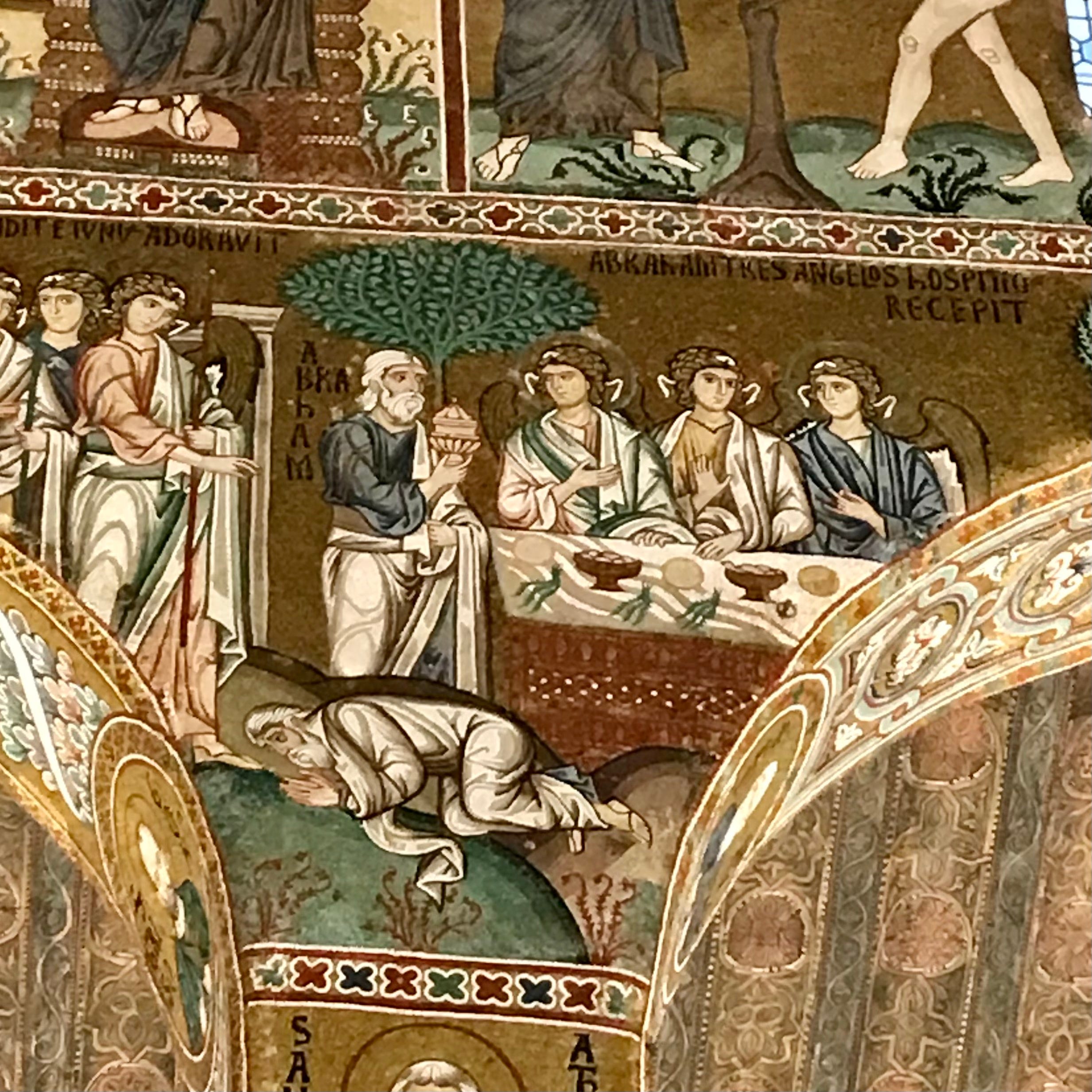
These mosaics were really meant to be read. They illustrate the Bible in such a clear and faithful way that the individual scenes could be panels in an illustrated children’s retelling of the Old and New Testaments. They have captions, mostly in Latin, to go with.
So, looking up at the walls over the nave columns, and walking slowly from front to back of the church, then around the other side, one can read the story of the Old Testament from Creation to Adam and Eve, Noah, Abraham, Isaac, and Jacob. These are stories that I read as a child at school in DC and Ann Arbor. It was a bit surreal to be able to read the same tales, with no alterations, on the walls of a twelfth-century church built by a Norman king for the medieval public of Sicily. Here were some of my favorite panels (zoomed in, because shot from the ground; to really see these, you will have to visit—sorry).
I spent probably forty-five minutes in the chapel, and then a while in the gift shop, scanning some books about the chapel (which I couldn’t buy, because no room in my suitcase).
It was Thanksgiving, so I had no work in the afternoon, and took the opportunity to take a nap. In the evening, I ventured out and it was pouring but I had an umbrella. I sat under an awning outside a restaurant on the Via Maqueda and ordered a veggie burger, because it was the most American thing I could find (but what they meant was: grilled vegetables on a bun, no burger). I got pastries from Costa, had a wet walk home to a Thanksgiving zoom with family members in Florida, and then called it a night.
Before I go, here’s one last picture in the Palatine Chapel (and its social-distancing sign), which though I have not raved about it as much as I could have, was one of the architectural highlights of the trip: